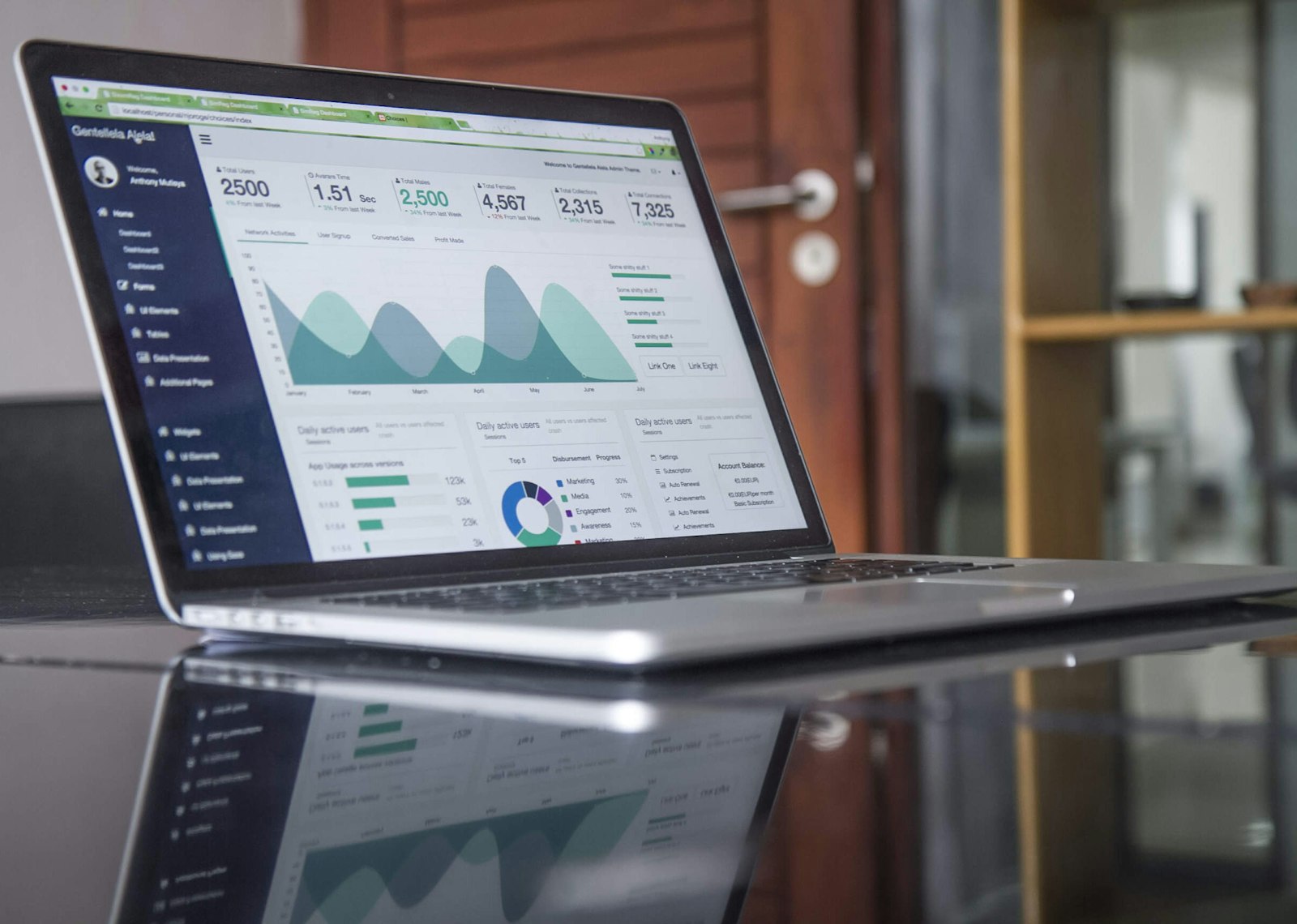
If you've ever looked at your SEO agency invoice and wondered exactly how much you paid per lead that actually came in — you're not alone. Most small business owners have no idea what their true cost per lead from SEO is. They pay $2,500 a month, they see some traffic movement, and they assume it's working. Maybe it is. Maybe it isn't. Without a cost-per-lead (CPL) framework anchored to your specific industry, you're flying blind.
This guide gives you a concrete, industry-by-industry breakdown of what SEO-generated leads cost when you use a traditional agency versus an automated SEO platform. More importantly, it gives you a working mental calculator so you can run these numbers for your own business before you sign another contract or write another check.
The goal here is clarity — not a sales pitch — because the math tends to speak for itself once you lay it out properly.
Why Cost Per Lead Is the Only SEO Metric That Actually Matters
Rankings are vanity. Traffic is flattery. Cost per lead is reality.
A page ranking number-one for a keyword means nothing if the keyword attracts window-shoppers who never convert. An agency can deliver a beautiful monthly report full of domain authority improvements and impressions graphs while your phone stays quiet. The only number that connects SEO spend to business outcomes is CPL.
The CPL Formula Every Business Owner Should Know
The math is straightforward:
- Monthly SEO Investment ÷ Organic Leads Generated That Month = Cost Per Lead
If you pay an agency $3,000/month and generate 15 organic leads, your CPL is $200. If the same $3,000 generated 60 leads, your CPL drops to $50. The spend is identical — the efficiency is wildly different, and that gap is almost entirely determined by how well your SEO system produces volume and velocity of content.
Why Volume and Velocity Drive CPL Down
Every new indexed page is a new doorway into your website. Every indexed doorway has a chance to rank for a query, capture a click, and convert a visitor into a lead. Traditional agencies produce 4-8 pieces of content per month at best. An automated SEO platform publishing daily content produces 20-30 pieces per month — roughly 4 to 6 times the surface area. More surface area at the same monthly cost means your CPL compresses over time, sometimes dramatically.
The Baseline CPL Benchmarks Most Agencies Won't Show You
Before we get into industry-by-industry specifics, here are the directional benchmarks that appear consistently across small-to-mid-market service businesses. These are not cherry-picked best cases — they represent typical outcomes after 6-12 months of consistent SEO effort.
- Traditional SEO agency ($2,000-$5,000/month retainer): CPL typically ranges from $120 to $400 depending on market competition and content output volume.
- DIY SEO (owner does it themselves): CPL appears low on the invoice but balloons when you count the 10-20 hours per month of owner time at any reasonable opportunity cost.
- Automated SEO platform ($99-$300/month): CPL typically ranges from $15 to $80 at maturity (months 4-12), driven by high content output and compounding organic authority.
The gap looks extreme on paper. It narrows somewhat in hyper-competitive markets. It widens further in local or niche markets. The industry-specific breakdowns below show exactly where your business likely sits.
Home Services: Plumbers, HVAC, Electricians, Roofers
Home services is where the CPL math becomes especially compelling — and where most small operators are still grossly overpaying.
What Agencies Typically Charge and Deliver
A regional HVAC company paying $3,500/month to an SEO agency typically receives: one technical audit (usually front-loaded and never repeated), 4-6 blog posts per month, light local citation management, and monthly reporting. In a mid-size market, that might produce 20-35 organic leads per month at peak performance — putting CPL between $100 and $175.
What an Automated Platform Delivers for the Same Period
At $99/month, an automated SEO platform publishes daily content (20-30 posts per month), syncs citations across 50+ local directories, and maintains keyword tracking continuously. By month six, organic lead volume from the same geographic market typically reaches 40-70 leads per month for a local home services company — producing a CPL of $1.50 to $2.50 per lead.
That's not a rounding difference. That's a structural difference in how the two systems work.
Industry CPL Range Summary: Home Services
- Agency average CPL: $120 - $200
- Automated platform CPL at month 3: $30 - $60
- Automated platform CPL at month 9: $5 - $20
- Lifetime value of a home services customer: $800 - $4,000+
- Break-even leads needed to cover $99/month: literally 1 job
Legal Services: Personal Injury, Family Law, Immigration
Legal is one of the most expensive paid-search categories on the internet — personal injury keywords routinely cost $50-$200 per click in Google Ads. That makes organic SEO extraordinarily valuable, and it makes CPL benchmarks here feel almost unrealistic by comparison.
Agency CPL in Legal
Legal SEO agencies are among the priciest — retainers of $5,000 to $10,000 per month are common for mid-market law firms. Even so, CPL from organic channels for a personal injury practice might run $300 to $800 per lead when you divide the retainer by actual inbound organic contacts. Many firms rationalize this because a single signed case is worth $15,000 to $150,000+ in contingency fees.
Automated Platform CPL in Legal
A solo immigration attorney or small family law practice using an automated SEO platform at $99/month can generate informational and transactional content at scale — "how to file for divorce in [city]," "immigration green card timeline questions" — content that captures people mid-research. At maturity, a small firm often sees 15-30 qualified organic leads per month, putting CPL in the $3 to $7 range. The ROI at those numbers, given client lifetime value, is effectively uncapped.
Industry CPL Range Summary: Legal
- Agency average CPL: $300 - $800
- Automated platform CPL at month 6+: $5 - $30
- Paid search CPL comparison: $300 - $1,500
- Average case value: $5,000 - $150,000
Healthcare and Dental Practices
Healthcare SEO has unique complexity — HIPAA considerations, E-E-A-T requirements from Google (expertise, experience, authoritativeness, trustworthiness), and the reality that patients often conduct several sessions of research before booking. That research trail is where content-dense SEO systems win decisively.
The Content Depth Advantage in Healthcare
A dental practice publishing one blog post per week through an agency gets 52 pages per year. A practice on an automated daily publishing system gets 300+ pages per year. When those pages cover procedure-specific questions ("does a root canal hurt," "dental implant recovery time," "how much does Invisalign cost in [city]"), they capture patients at precisely the moment of intent. More intent-capturing pages = lower CPL.
Industry CPL Range Summary: Healthcare and Dental
- Agency average CPL: $80 - $250
- Automated platform CPL at month 6+: $8 - $35
- Average patient lifetime value: $1,500 - $12,000
- Key content types driving conversions: procedure FAQs, cost guides, before-and-after service comparisons
Real Estate and Mortgage
Few industries have higher transaction values than real estate — and few industries have SEO ecosystems as dominated by large portals (Zillow, Realtor.com, Redfin). This makes hyper-local and niche content strategy the competitive wedge for independent agents and brokerages.
How Local Niche Content Compresses CPL
A real estate agent who publishes neighborhood-specific content — "best streets for families in [subdivision]," "what $450,000 buys you in [zip code] this fall" — operates in a content category the big portals don't touch. An automated platform producing 20-30 pieces of locally grounded content per month can own those micro-niches within 90-180 days. The leads that come from those pages are often buyers with intent and timeline, not casual browsers.
Industry CPL Range Summary: Real Estate
- Agency average CPL: $150 - $500
- Automated platform CPL at month 9+: $10 - $40
- Average transaction commission: $8,000 - $25,000
- Typical lead-to-close rate from organic: 3-8%
Contractors and Specialty Trades
Roofing, remodeling, landscaping, painting, flooring — these are businesses where the average job ticket runs $3,000 to $25,000, and where most owners still rely primarily on referrals and word-of-mouth. That's fine until it isn't. SEO for contractors is one of the highest-ROI plays available to a small business, especially in regional markets where competition is thin.
The Compounding Effect in Contractor SEO
Because contractor SEO is often underinvested at the local level, the compounding benefit of consistent content is pronounced. A roofing company that publishes content steadily for 9 months — hail damage guides, roof replacement cost calculators, how-to-spot-signs-your-roof-needs-replacing articles — often finds themselves with 10-20 ranking pages before a single local competitor has made the same investment. That first-mover advantage is durable. Check out our complete SEO playbook for service businesses to see exactly how this content architecture works.
Industry CPL Range Summary: Contractors
- Agency average CPL: $100 - $300
- Automated platform CPL at month 6+: $4 - $25
- Average project value: $3,500 - $20,000
- Best content types: seasonal guides, cost estimators, before-and-after project posts, city-specific service pages
For more specific guidance on contractor SEO, see our done-for-you SEO for contractors service page.
Fitness, Wellness, and Personal Services
Gyms, personal trainers, chiropractors, massage therapists, and estheticians operate in high-frequency, relationship-based businesses. A new client who finds you through organic search and books a first session might return 2-4 times per month for years. The lifetime value calculation makes even modest organic lead volume extremely valuable.
Industry CPL Range Summary: Fitness and Wellness
- Agency average CPL: $60 - $180
- Automated platform CPL at month 6+: $5 - $20
- Average client lifetime value: $1,200 - $8,000
- Key content angles: local fitness guides, comparison posts, practitioner credential content, service-specific FAQ pages
How to Build Your Own CPL Calculator: A Step-by-Step Method
You don't need a spreadsheet wizard to calculate your SEO CPL. Here's the working method.
Step 1 — Establish Your Monthly SEO Spend
This is easy: it's your agency retainer, or your platform subscription. Include any add-on costs. For DIY, estimate your time at your hourly consulting rate or opportunity cost rate.
Step 2 — Isolate Your Organic Lead Count
Pull your Google Analytics (or equivalent) and filter form submissions, phone call conversions, and chat initiations by traffic source = Organic. If you're not tracking this, that's the first thing to fix — Google Search Central has documentation on how to set up conversion tracking correctly within Search Console.
Step 3 — Calculate and Benchmark
Divide monthly spend by monthly organic leads. Then compare against the industry benchmarks in this guide. If your CPL is 2x or more above the automated platform benchmarks for your industry, you have a clear efficiency gap to close.
Step 4 — Project the 12-Month CPL Trajectory
SEO is not a flat-line return — it compounds. A platform generating 15 leads in month 3 often generates 45-70 leads by month 12 as indexed pages accumulate and authority builds. Model both scenarios: (a) staying with your current system at its current trajectory, and (b) switching to a higher-volume content system and applying the typical growth curve. The 12-month cumulative CPL difference is usually startling.
The Hidden Costs That Inflate Agency CPL Beyond the Retainer
The monthly retainer number understates true agency CPL. There are structural hidden costs that experienced buyers know to account for — most first-time agency clients discover them after the fact.
- Ramp time: Most agencies deliver minimal outputs in months 1-2 while doing discovery, auditing, and strategy. You pay full price for partial delivery.
- Transition costs: When you leave an agency, institutional knowledge about your SEO leaves too. Custom strategies rarely get documented in transferable form.
- Scope creep: Anything beyond the base retainer — extra pages, emergency audits, site migration support — gets billed at hourly rates that quickly exceed the retainer itself.
- Reporting overhead: Your team spends time reviewing reports, attending calls, and providing feedback. Count that time at your internal cost rate.
- Content revisions: Agency content often requires multiple revision rounds. Each round costs agency hours that come from a finite monthly bucket, reducing other deliverables.
None of these costs appear in an agency's CPL calculation. When you add them in, agency CPL in the real world often runs 25-40% higher than the retainer-divided-by-leads figure suggests. We break this down in more detail in our guide to replacing your SEO agency with software.
What Makes Automated Platform CPL So Different: The Content Volume Equation
The single biggest driver of CPL compression on an automated platform is content velocity. It's not magic — it's arithmetic.
The Indexed Pages to Leads Relationship
Every properly optimized page that gets indexed has a statistical probability of ranking for some subset of relevant queries. Industry data consistently shows that sites with 400+ indexed posts generate organic traffic volumes that sites with 50 posts simply can't match, even if the 50-post site has higher individual page authority. Volume creates a portfolio effect — many pages ranking for many long-tail queries — that concentrates traffic and keeps CPL low even if individual page traffic is modest.
Daily Publishing vs. Monthly Publishing: A 12-Month Comparison
- Agency at 6 posts/month: 72 new pages after 12 months
- Automated platform at 25 posts/month: 300 new pages after 12 months
- Indexed page ratio: 4.2x advantage for the automated platform
- Expected traffic ratio at month 12: 3x to 5x (accounting for quality and relevance filtering)
- CPL ratio: automated platform typically 5x to 10x lower
This isn't theoretical — it's the structural output advantage that platform-scale publishing creates. See our AI content publishing service for how this works in practice.
GEO (Generative Engine Optimization) and Its Impact on Future CPL
In 2026, a meaningful and growing percentage of commercial research queries happen inside AI search tools — ChatGPT, Perplexity, Google's AI Overviews, and similar systems. These engines don't deliver ten blue links. They deliver synthesized answers that cite specific sources. If your content isn't structured to be cited by those engines, you're invisible to an increasingly large segment of researching buyers.
This creates a new CPL dynamic. Businesses that invest in generative engine optimization now are building a citation presence that, once established, generates referral leads from AI engines at effectively zero marginal cost. The CPL from those leads approaches zero once the content is indexed and cited — it's pure compounding return on the original content investment.
For local businesses, this matters even more. When a potential customer asks ChatGPT "who is the best roofer in [city]" or "what does dental implant surgery cost in [city]" — the engine cites authoritative local content. Being that cited source is what GEO for local business is designed to accomplish.
Evaluating an SEO Automation Platform Before You Sign: A Due Diligence Checklist
Not all SEO automation platforms are equivalent. Here's what to verify before committing — whether you're evaluating SEO Autopilot or any other system. We've also written a full SEO automation platform audit checklist if you want the complete version.
Content Quality Signals to Verify
- Does the platform ground content in your actual business — services, service area, tone — or does it produce generic templates?
- Can you review published content before and after it goes live?
- Does the platform cite real sources, or does it fabricate statistics and client testimonials?
- Is there a visual QA step that checks published pages for formatting errors, broken images, or schema issues?
Technical SEO Infrastructure to Confirm
- Does the platform submit sitemaps and manage Search Console integration, or do you handle that manually?
- Is structured data (schema.org markup) applied automatically to posts and service pages?
- Does the platform sync local citations to directories like Google Business Profile, Yelp, and Apple Maps — or just claim it does?
- How frequently is keyword research refreshed? Weekly is the correct cadence for a dynamic small business market.
The SBA's marketing and sales guidance also provides useful baseline questions to ask any marketing vendor about accountability and measurable outcomes.
Frequently Asked Questions
How long does it take for an SEO automation platform to start reducing my cost per lead?
Most businesses see meaningful CPL improvement by month 3-4, when the volume of indexed content begins to generate consistent organic traffic. The steepest CPL improvement typically happens between months 4 and 9 as Google indexes more pages and individual posts begin to rank competitively. By month 12, businesses running daily content publishing often have CPL figures 5x to 10x lower than what they experienced with a traditional agency retainer model — though results vary by market competitiveness and starting domain authority.
What is a good cost per lead for organic SEO in my industry?
"Good" is relative to your average transaction value. As a general rule of thumb, a CPL of less than 5% of your average sale is healthy — meaning if your average job is $5,000, a CPL under $250 is acceptable. However, with an automated SEO platform producing high-volume content, CPLs of $5-$30 are achievable in most local service industries by month 6+, making the ROI dramatically stronger than that 5% threshold implies. Compare your current CPL to the industry benchmarks in this post as your baseline reference.
Can I use this CPL calculator approach for both Google and AI search leads?
Yes, and you should. In 2026, referral traffic from AI engines like ChatGPT and Perplexity is trackable via UTM parameters and referral source data in your analytics. Segment your organic leads by source — traditional search engine organic, AI engine referral, and direct from citations. Each has a distinct CPL. AI engine referral CPL is often the lowest of all three because it typically involves a user who has already received a synthesized recommendation and arrives with strong intent. Track them separately for the clearest picture.
Is the $99/month price point realistic for actual SEO results, or is it too good to be true?
The economics work because AI-powered content workflows have collapsed the cost structure of SEO production. What required a 5-person agency team in 2022 — content writer, editor, keyword researcher, link builder, local SEO specialist — can now be orchestrated by automated systems at a fraction of that cost. The $99/month reflects that genuine structural cost reduction, not a cut in output quality. The key is that the platform must be grounded in your actual business data, not producing generic content. Volume without relevance produces traffic without leads.
How does citation sync affect my SEO cost per lead?
Citation sync has an outsized impact on local CPL because local pack rankings (the map results at the top of Google for service queries) drive a disproportionate share of local leads. Consistent NAP (name, address, phone) data across 50+ directories is a foundational trust signal for local rankings. Businesses that fix citation inconsistencies often see local pack ranking improvements within 60 days — which adds organic lead volume without any additional content investment, directly compressing CPL.
Should I count my time when calculating DIY SEO cost per lead?
Absolutely — and most business owners dramatically undercount this. If you spend 15 hours per month on SEO tasks and your billable rate or opportunity cost is $100/hour, that's $1,500 in hidden monthly SEO spend. Divide that by the leads you generate and you'll often find DIY CPL is comparable to or higher than an agency retainer. The honest accounting almost always makes a case for either a professional agency or an automated platform, depending on budget and growth goals.
What industries see the fastest CPL improvement with SEO automation?
The fastest movers are industries where local search intent is high, content depth is underexploited by competitors, and average job value is significant. Home services (HVAC, plumbing, roofing), legal (estate planning, family law in smaller markets), specialty contractors, and independent healthcare providers consistently show the fastest CPL compression with automated SEO platforms. Hyper-competitive markets like personal injury law in major metros or real estate in gateway cities take longer but still reach competitive CPL within 12 months with consistent execution.
Ready to Run Your Own CPL Numbers With a Live Platform?
The frameworks in this guide give you a clear picture of where your SEO spend stands relative to what's now achievable. If your current CPL is above $100 in a local service category, there is almost certainly a structural improvement available to you — and the math typically gets you there for less than the cost of a single additional employee.
SEO Autopilot runs daily content publishing, weekly keyword research, citation sync across 50+ directories, local GEO content for AI search visibility, and optional YouTube automation — all for $99/month. No agency markup. No 6-month lock-in. No generic templates. Every output is grounded in your actual business, your actual market, your actual services.
- Start your onboarding here — it takes under 10 minutes.
- Read more about all platform services to understand the full output stack.
- Compare options on our agency vs. software comparison page.
- Have questions first? Contact the team directly.
Your next organic lead shouldn't cost $200. With the right system, it doesn't have to.